Machine learning, Image understanding, Signal analysis, Neuroscience, Robotics, Forensic science, Digital forensics and other disciplines, converged in a truly multidisciplinary effort to devise and build advanced systems to facilitate the interpretation of signals recorded from individuals acting in a given environment. This is what we simply call today "Biometrics".
Over the last two decades automatic biometric recognition reached a very high accuracy even on very large and challenging datasets. However, other issues and concerns, not directly related to the recognition accuracy, arise including the fairness, reliability and trustfulness of current biometric systems. This edition of the school will address these issues trying to answer some compelling questions, such as: How to mitigate bias in biometric systems? How to design privacy-preserving and "ethical" biometric devices? What can we learn from human perception? How to better deploy current AI approaches? How to cope for adversarial attacks in biometric recognition? What is the scalability and real potential for biometric systems? What is the potential impact of biometrics in forensic investigation and crime prevention?
This school follows the successful track of the International Summer Schools on Biometrics held since 2003. In this 21st edition, the courses will focus on the lessons learned and on new and emerging issues:
- The impact of AI and advanced learning techniques in Biometrics.
- How to make "Deep Biometric" systems explainable.
- How to exploit new biometric technologies in forensic and emerging applications.
- How to develop fair, trustful and privacy-friendly biometric systems.
- Where are we going now?
The courses will provide a clear and in-depth picture on the state-of-the-art in biometric verification/identification technology, both under the theoretical and scientific point of view as well as in diverse application domains.
The lectures will be given by 18 outstanding experts in the field, from both academia and industry.
Open sessions will be organised with questions and answers moderated by leading experts in the field.
Download School Schedule 2024
Download Application Form
Participant application
The school is open to about 70 highly qualified, motivated and pre-selected participants. Phd students, post-docs, researchers, forensic examiners, police officers and professionals are encouraged to apply. To attend the school classes, physical presence of the participants will be required. In exceptional cases of travel limitations, remote participation with videoconference facilities will be also allowed.
The school fees will be in the order of 1,700 euro (400 euro in videoconference) for Phd students and 2,300 euro (800 euro in videoconference)for others. The fees will include full board accommodation at the school premises, all courses and handling material.
A limited number of scholarships offered by the school sponsors, partially covering the fees, will be awarded to Phd students, selected on the basis of their scientific background and on-going research work. The scholarship request form can be downloaded
HERE.
Phd students, researchers and post-docs are encouraged to submit a short paper (6 pages maximum) for an oral presentation on their current research activity.
Poster boards will be also available to all participants to display their current research or professional activities.
School location
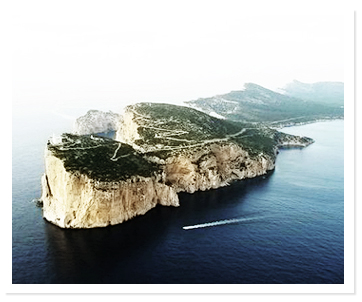
The school will be hosted by hotel Dei Pini in Porto Conte, near Alghero, Sardinia, one of the most beautiful resorts in the Mediterranean sea.
The Hotel faces out over one of the most beautiful of Alghero's beaches, Le Bombarde, and is immersed in the Porto Conte Nature Reserve, a location of which we are very proud and which we go our utmost to preserve year after year.
Located just 9 km from Alghero Fertilia airport and 7 km from the city centre (transport links include a cycle route), the Hotel dei Pini can boast decades of experience in providing hospitality.
All the facilities you would expect of an excellent 4-star hotel, together with a magical atmosphere that will engage with all of your senses. The clean, crystal-clear tract of sea, just a few yards from the marine protected area; the lush pine forest and fragrant vegetation; the private beach, only a minutes walk away; the kind, courteous staff; the delicious, fresh food; and the swimming pool with sea-view hydromassage corner; these are some of the facilities that will allow you to savour your holiday in great comfort, without feeling the need to leave the hotel hardly at all.
The hotel Dei Pini is a renowned conference center, fully equipped for scientific events. The entire structure, as well as the surroundings, proved to be a perfect environment for the school activities.
Getting there: Regular bus and hotel shuttle to/from the town center.
Alghero Fertilia Airport (Aho) 10 min. From the center of Alghero or the Airoport follow the signs for the Fertilia area, and then for Porto Conte - Capo Caccia on the "S.S. 127 bis" highway until you reach the interchange for Bombarde beach ("spiaggia delle Bombarde")
Olbia 136 Km. From the airport and sea port of Olbia, take the "S.S. 597" highway towards Sassari, then follow the signs for Fertilia
Cagliari 249 Km. From Cagliari, take the "S.S. 131" highway to Sassari, then follow the signs for Alghero - Fertilia
Submission of applications
Send a filled application
form to the school together with a short curriculum vitae, via e-mail
to Massimo Tistarelli: biometricsummerschool@gmail.com
Key Dates:
Submission of applications:
- Submission of applications: February 29th, 2024
- Notification of acceptance: March 15th, 2024
- Registration: April 15, 2024
School Committee
Directors:
Massimo Tistarelli
Computer Vision Laboratory
University of Sassari, Italy
Josef Bigun
Department of Computer Science
Halmstad University, Sweden
Enrico Grosso
Computer Vision Laboratory
University of Sassari, Italy
Anil K. Jain
Biometrics Laboratory
Michigan State University, USA
Distinguished lecturers from past school editions:
Josef Bigun
Halmstad University, Sweden
Vincent Bouatou
Morpho-Sagem Securité, France
Thirimachos Bourlai
West Virginia University, USA
Deepak Chandra
Google Inc., USA
Rama Chellappa
Univerity of Maryland, USA
John Daugman
Cambridge University, UK
Farzin Deravi
University of Kent, UK
Andrzej Drygajlo
Swiss Federal Institute of Technology at Lausanne (EPFL), Switzerland
James Haxby
Dartmouth University , USA
Anil K. Jain
Michigan State University, USA
Joseph Kittler
University of Surrey, UK
Davide Maltoni
Università di Bologna, Italy
John Mason
Swansea University, UK
Aldo Mattei
Arma dei Carabinieri, Italy
Didier Meuwly
Nederlands Forensisch Instituut (NFI), Netherlands
Emilio Mordini
Responsible Technology, Italy
Mark Nixon
University of Southampton, UK
Alice O'Toole
University of Texas, USA
Maja Pantic
Imperial College, UK
Jonhaton Phillips
NIST, USA
Tomaso Poggio
MIT, USA
Nalini Ratha
IBM, USA
Arun Ross
Michigan State University, USA
Tieniu Tan
CASIA-NLPR, China
Massimo Tistarelli
Università di Sassari, Italy
Alessandro Verri
Università di Genova - Italy
James Wayman
University of San Josè, USA
Lior Wolf
Tel Aviv University, Israel